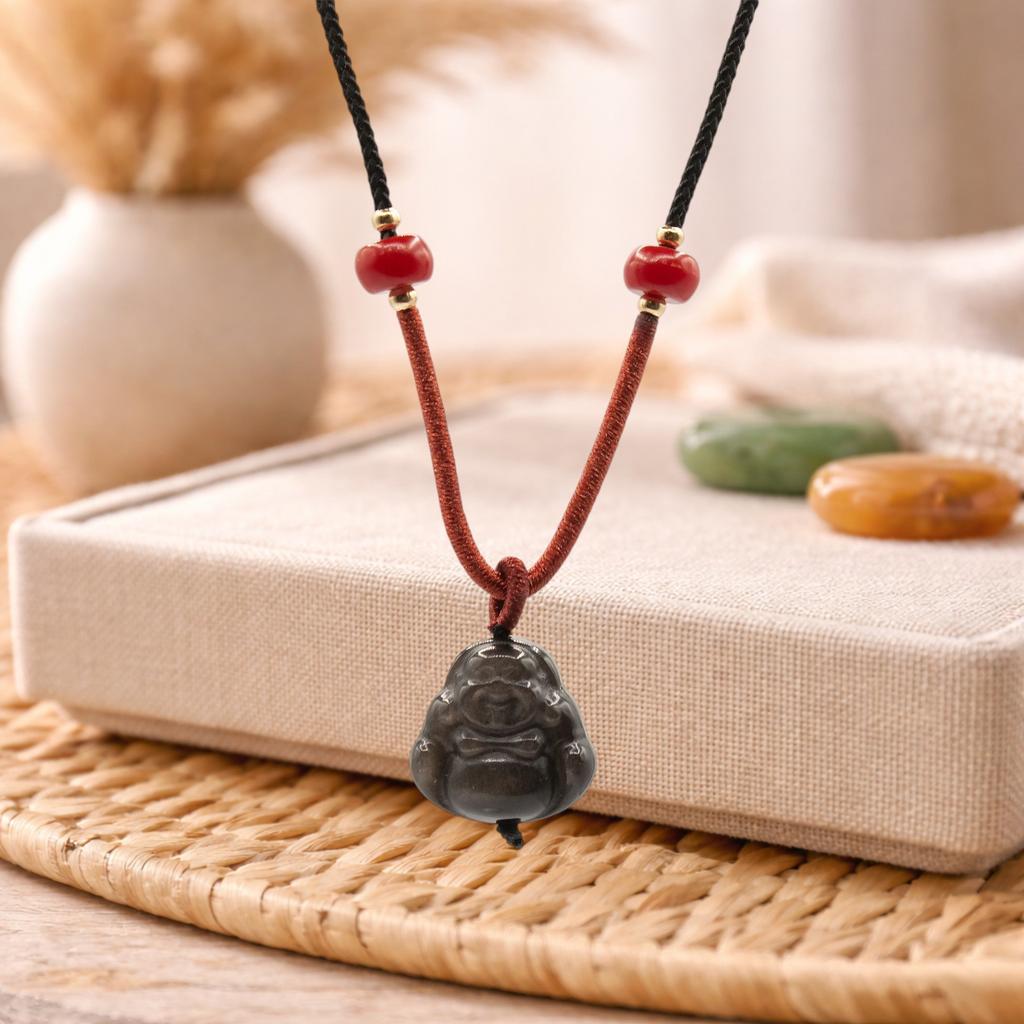
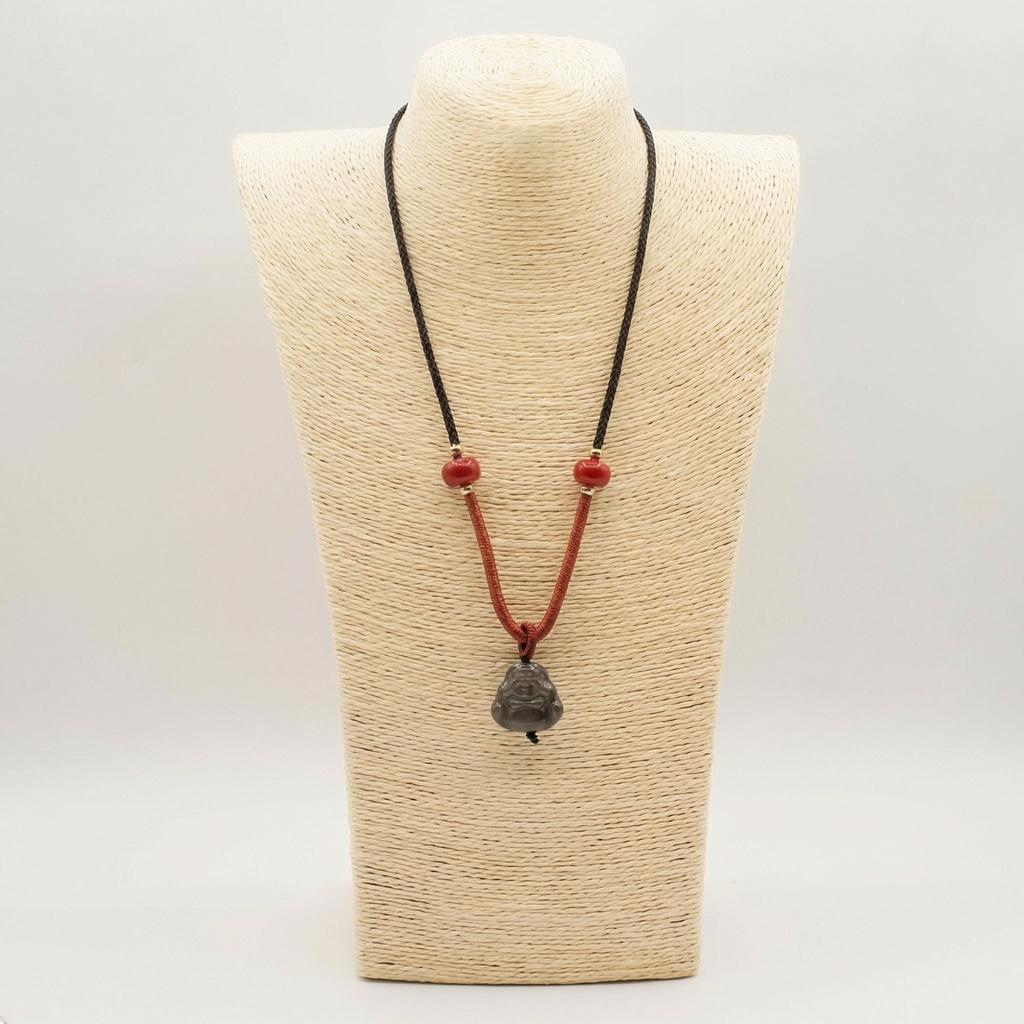
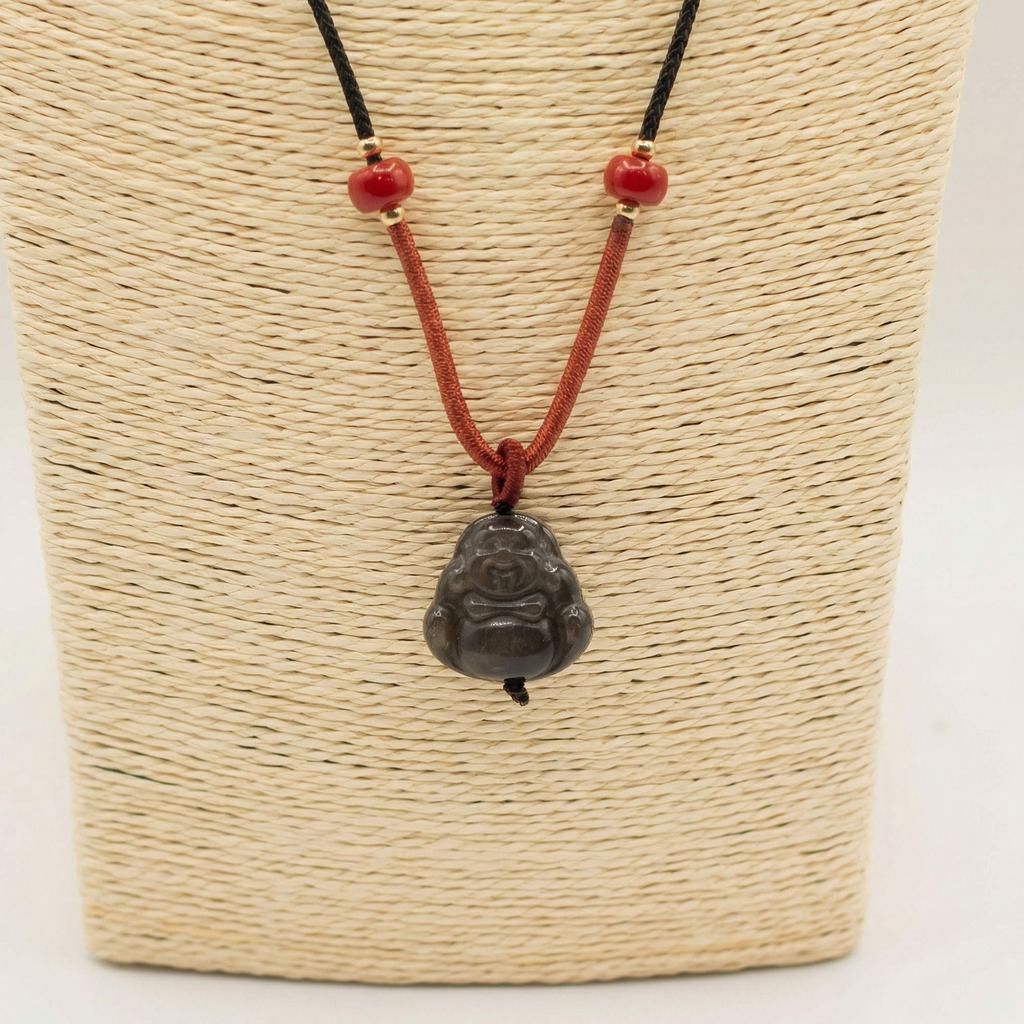
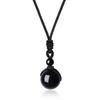
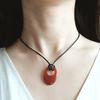
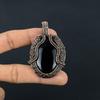
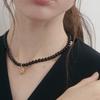
A seated Buddha pendant carved from silver sheen obsidian on an adjustable cord necklace. The stone is near-black at first glance, but when it catches light at certain angles, a silvery, almost metallic sheen moves across the surface like moonlight on dark water. That optical effect is what makes silver sheen obsidian visually distinct from plain black obsidian, and it gives this pendant a presence that photographs cannot fully capture. You need to see it move in real light to appreciate it.
What You'll Notice First
The silver sheen comes from tiny, aligned gas bubbles or mineral inclusions trapped within the volcanic glass during formation. These reflect light directionally, creating a characteristic silvery flash as the pendant moves.
The dark cord against the dark stone creates a cohesive, understated look. The sheen reveals itself gradually as the wearer moves and the light shifts — subtle rather than attention-seeking.
The seated Buddha figure is a recognisable symbol of peace, meditation, and inner calm. As a pendant worn above the waist and close to the heart, it falls within what most Buddhist traditions would consider appropriate wear.
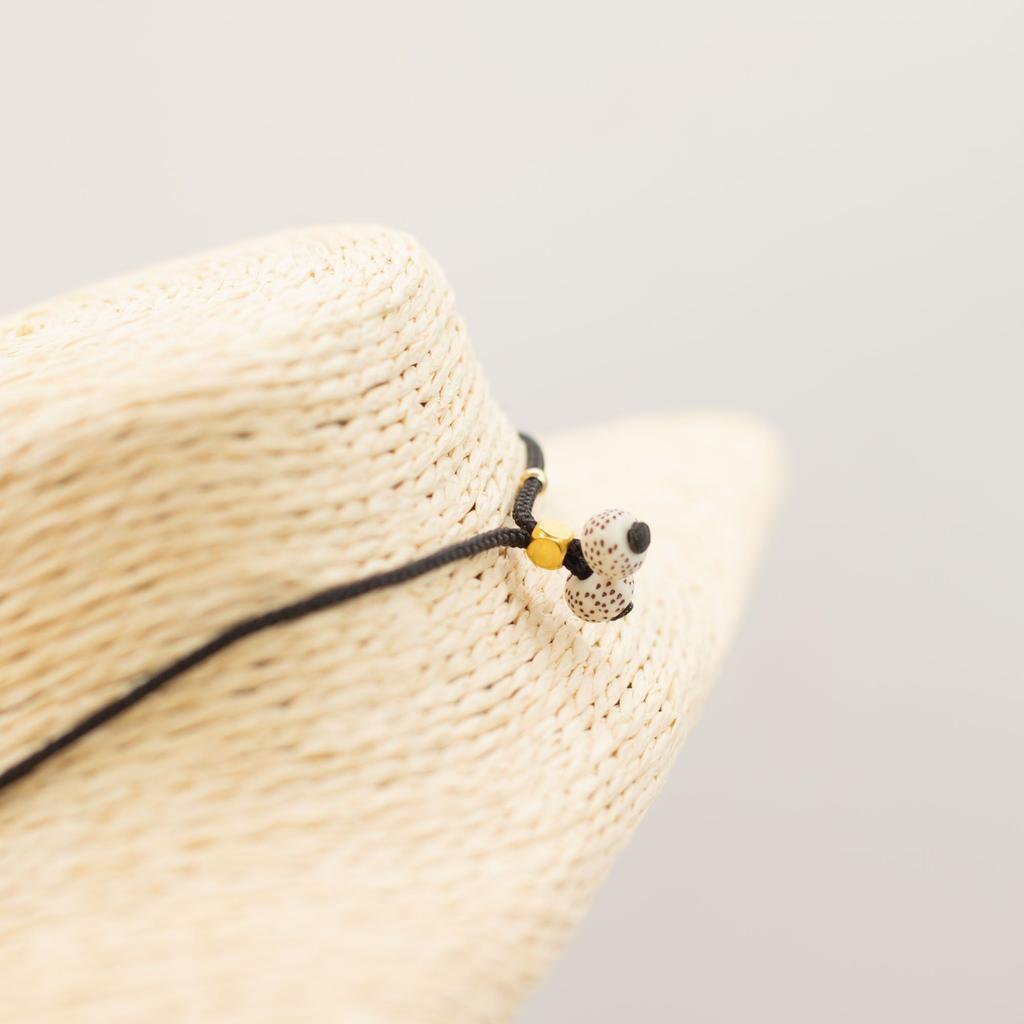
Total weight: around 5 grams. Adjustable cord sets the length from choker to mid-chest.
Volcanic Glass, Not a Gemstone
Obsidian forms when lava cools so rapidly that mineral crystals do not have time to develop, producing smooth, glassy solid instead of crystalline rock. It has been used by humans for longer than almost any other stone material — prehistoric cultures on every continent used it for blades and arrowheads because it fractures into edges sharper than surgical steel. The volcanic glass was also polished into mirrors in ancient Mesoamerica and Anatolia.
On the Mohs scale, obsidian sits at 5 to 5.5. It is adequate for pendant wear but can chip or scratch if knocked against harder stones or metal. The polished surface is smooth and glassy, almost liquid-looking, which suits the reflective sheen.
The Buddha Form
The Buddha image in jewellery crosses cultural and religious boundaries: worn by practising Buddhists as a devotional object, by meditation practitioners as a personal reminder, and by many others as a symbol of serenity with broad cultural resonance. The combination of silver sheen obsidian — dark, reflective, volcanic — with the Buddha form — still, meditative, peaceful — creates an interesting tension: the stone is geologically dramatic while the figure it is carved into represents stillness and equanimity.
Size and Details
Pendant: real silver sheen obsidian, seated Buddha shape, approximately 2.5 × 2.5 × 3 cm. Adjustable cord necklace. Total weight: approximately 5 g. Origin: China.
In the Crystal Tradition
Silver sheen obsidian is associated with introspection and self-reflection — the mirror metaphor is literal, as obsidian was used as an actual mirror for thousands of years. It is considered a grounding stone connected to the root chakra, and is often described as helping the wearer confront difficult truths with clarity rather than fear. The silver sheen specifically is sometimes linked to the mirror of the subconscious. These associations pair naturally with the Buddha form — both the stone and the shape point towards self-knowledge and inner peace.
Gift-Ready
A more specific gift than some of the range's simpler shapes — the Buddha form signals that the giver knows the recipient has an interest in meditation, mindfulness, or spiritual practice. That specificity makes it feel personal. The silver sheen adds an unusual quality that elevates the gift beyond a generic pendant — it gives the recipient something to discover. Good for birthdays, milestone moments, or as a meaningful thank-you for someone on a personal growth path. The darkest, most dramatic piece in the collection.
Common Questions
What causes the silver sheen effect?
Tiny aligned inclusions — typically nanoparticles of cristobalite or feldspar — trapped in the volcanic glass during formation. They reflect light directionally, creating the characteristic silvery flash as the angle changes.
Is wearing a Buddha pendant culturally appropriate?
As a pendant worn around the neck — above the waist, close to the heart — this falls within what most Buddhist traditions consider respectful. In some Southeast Asian cultures, wearing a Buddha image below the waist or treating it very casually is considered disrespectful.
How is this different from black agate?
Both are dark stones, but they have different character. Black agate is opaque and matte-to-subtly-lustrous. Silver sheen obsidian has a moving, reflective quality — a silvery flash that appears and disappears as the light changes.