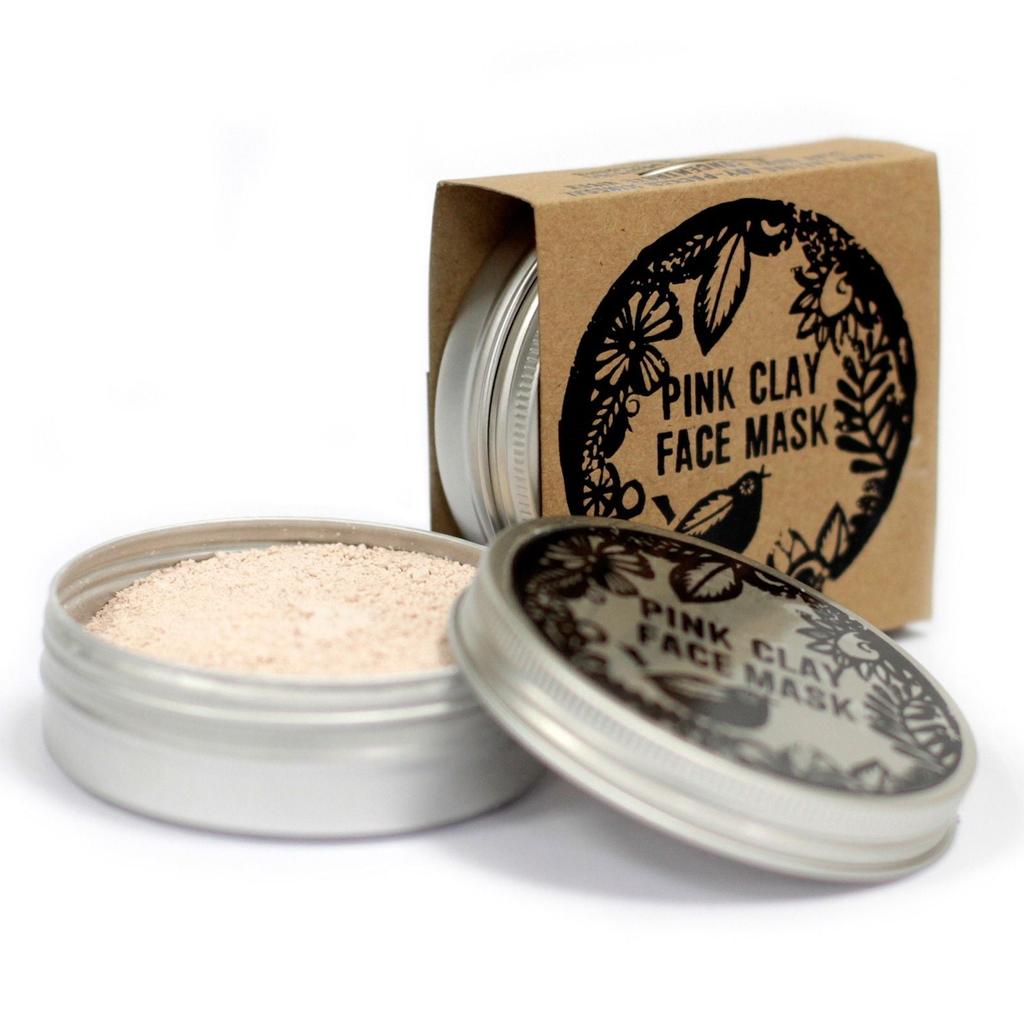
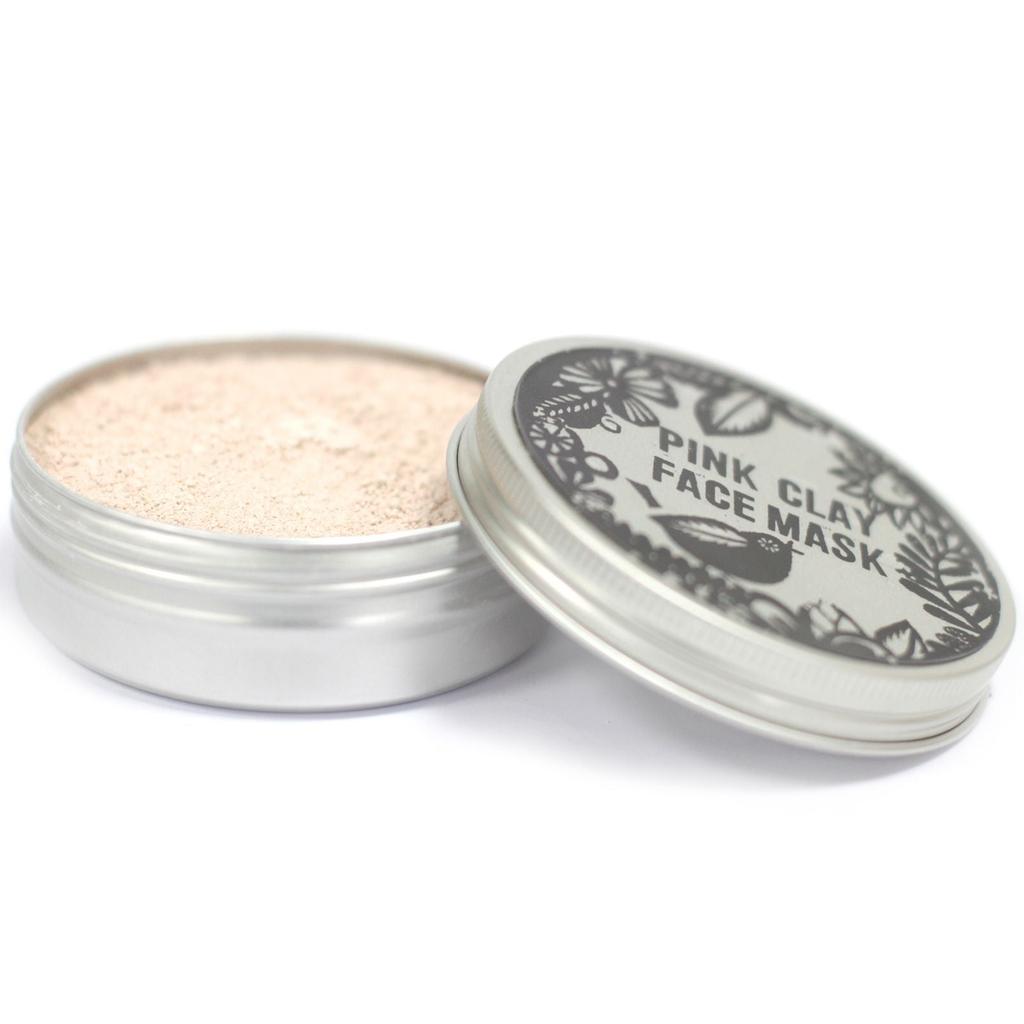
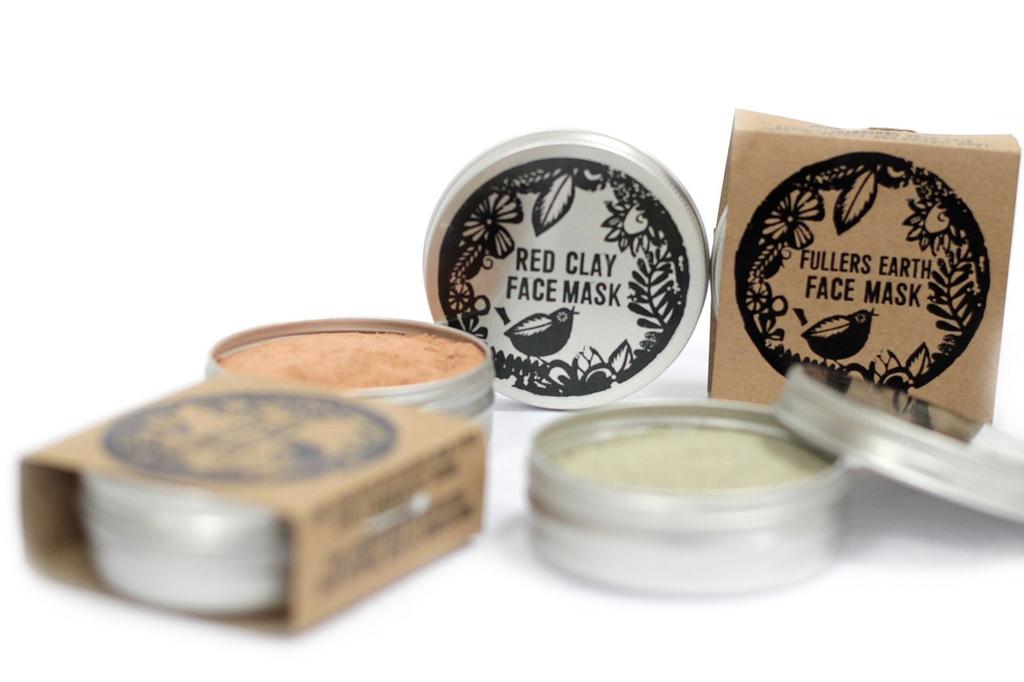
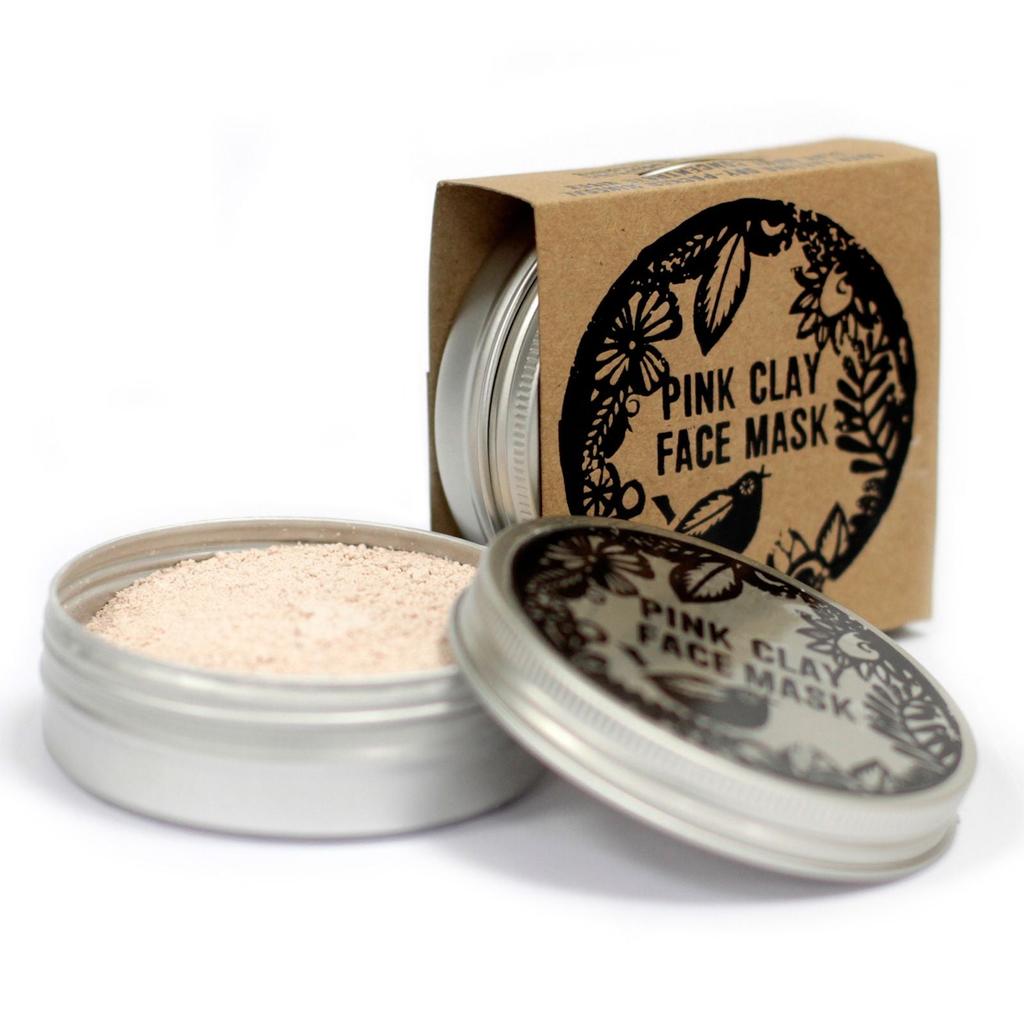
A natural pink clay face mask in powder form, sold in a 50g aluminium tin. This is the gentlest mask in the Agnes + Cat Earth's Face Mask range, designed specifically for sensitive and delicate skin types. Where the green clay and fuller's earth masks prioritise deep oil absorption, pink clay takes a softer approach — it draws out toxins and excess oils without stripping the skin or triggering the redness and tightness that stronger clays can cause on reactive skin.
Why Pink Clay Is Different
Pink clay is a blend of red clay and white kaolin clay, which is how it gets both its colour and its mild character. White kaolin is the gentlest clay used in skincare — so gentle it appears in products for babies — and blending it with red clay creates something that cleanses and detoxifies without the aggressive pull of green clay or fuller's earth. If other clay masks have left your skin feeling tight, dry, or irritated, pink clay is worth trying.
It gently draws out toxins and excess oils while helping to stimulate circulation, which can give the skin a subtle glow after rinsing. This mild circulatory boost is one of pink clay's distinctive benefits — the skin looks fresher and slightly more alive rather than just cleaner.
Pink clay is sometimes described as a "brightening" clay, and that is fair in the sense that it evens out the complexion without harsh exfoliation. It is not a dramatic transformation — this is skincare, not surgery — but over time, regular use can contribute to a more balanced, less dull appearance, particularly for skin that tends toward redness or uneven tone.
The 50g tin is smaller than the 80g tins used for the other masks in this range. Pink clay is a more refined mineral and the lower weight reflects this. It still provides roughly 10 to 15 full face applications, which at a weekly mask gives you two to four months of use.
For Sensitive Skin, Honestly
"Suitable for sensitive skin" is a phrase that appears on a lot of skincare products and means very little on most of them. In this case, the claim is grounded in the actual mineral composition — white kaolin clay is genuinely one of the mildest substances used in skincare, and red clay is the second-gentlest in common use. The blend produces a mask that provides real cleansing without the intensity that makes stronger clays problematic for reactive skin. If you have rosacea, easily irritated skin, or skin that flushes and tightens after most treatments, pink clay is the logical starting point.
That said, "gentle" does not mean "impossible to react to." If you have very reactive skin, patch test on the inside of your wrist first. And follow any clay mask — even this one — with a good moisturiser, because clay by nature absorbs moisture along with impurities.
Using Pink Clay
Mix a heaped teaspoon with water or floral water to a smooth paste, apply to clean skin, leave for 10 to 15 minutes, and rinse with warm water. Because pink clay is gentler, you have slightly more flexibility with mixing liquids — rose water pairs particularly well and adds a complementary soothing quality. Full mixing and application instructions are covered in the Red Clay description for this range.
Common Questions
Is pink clay just for sensitive skin, or can anyone use it?
Anyone can use it. If your skin is not particularly oily or problematic, pink clay provides a pleasant, mild weekly treatment that cleanses and refreshes without any harshness. It is the best choice for sensitive skin, but it is not limited to sensitive skin. Think of it as the mask equivalent of a gentle walk rather than a hard workout — effective, but not intense.
Why is this tin 50g when the others are 80g?
Pink clay (the blend of red and white kaolin) is a more refined mineral, and the 50g size reflects that. It still provides 10 to 15 full face applications, which is two to four months of weekly use.
How does pink clay compare to red clay?
Red clay is a step up in intensity — it cleanses and detoxifies more firmly while still being relatively gentle. Pink clay is milder because of the white kaolin content. If your skin is sensitive or delicate, start with pink. If your skin is normal to combination and not particularly reactive, red clay offers a stronger clean. You could also alternate between the two — pink clay for maintenance weeks, red clay for a deeper periodic clean.
Can I use pink clay more often than once a week?
Because it is the gentlest option, some people with non-reactive skin use pink clay twice a week without issue. However, once a week is still a good guideline to start with. Pay attention to how your skin responds over the first few uses before increasing frequency.