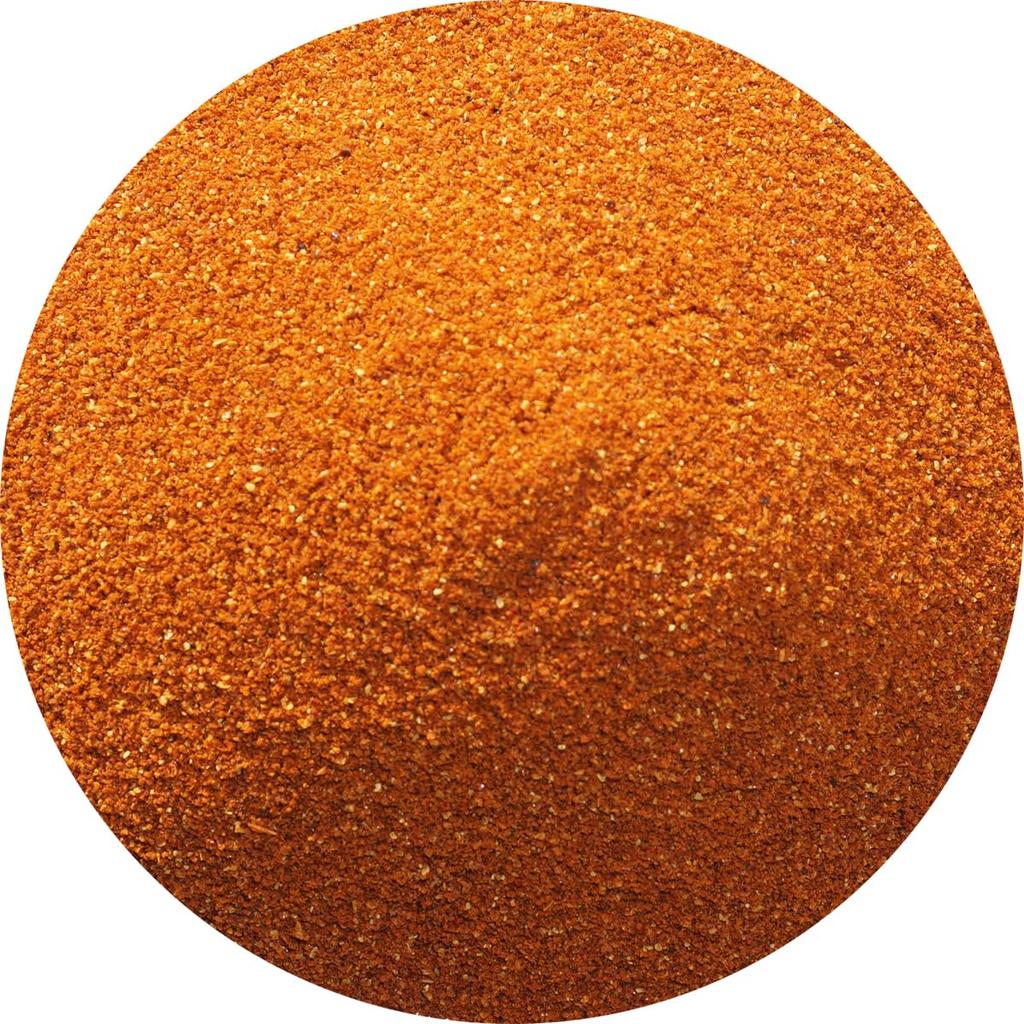
Origin: USA ■ Ingredients: Chili Peppers ■ Solanaceae (Solanaceae) ■ Best Before Date: 300 days ■ Package: Bags ●
As this is a raw material, impurities may be present. ■ Please note that the origin may change depending on the situation.
The tongue-searing chili pepper is a spice with a long history, its cultivation dating back 10,000 years. It originated in Latin America, in the Solanaceae (Solanaceae) genus. While it is nearly impossible to precisely classify its quality and varieties (there are said to be over 100 species in Mexico alone), chili pepper varieties share common characteristics. They generally grow in tropical and subtropical regions, reaching heights of 20cm to 1.8m. All varieties of the fruit, used as a spice, have a smooth, glossy, firm skin and a cavity inside protecting countless seeds. This is the only common feature; shape, size, color, and intensity of heat vary depending on the variety. They range in size from 5mm to 30cm and can be round, angular, flat, long, thin, tapered, tailed, or round-shouldered. They also come in a variety of colors, from bright green when immature to red, yellow, lilac, brown, black, or cream, depending on the variety. The most common varieties found in UK markets and greengrocers are the 7.5-10cm red or tapered varieties. Pungency also ranges from mild to fiery. Generally (though there are exceptions), the smaller, thinner, and darker the peppers, the more intense the spiciness.
Chili peppers are an essential food ingredient throughout Latin America, Indonesia, Southeast Asia, China, Japan, India, the Middle East, and Africa. They are readily available, both fresh and dried, in a wide variety of forms, including unripe, whole, dried, ground, and chili powder. The best-known powders are cayenne pepper and paprika, which hold a special place among chili peppers.