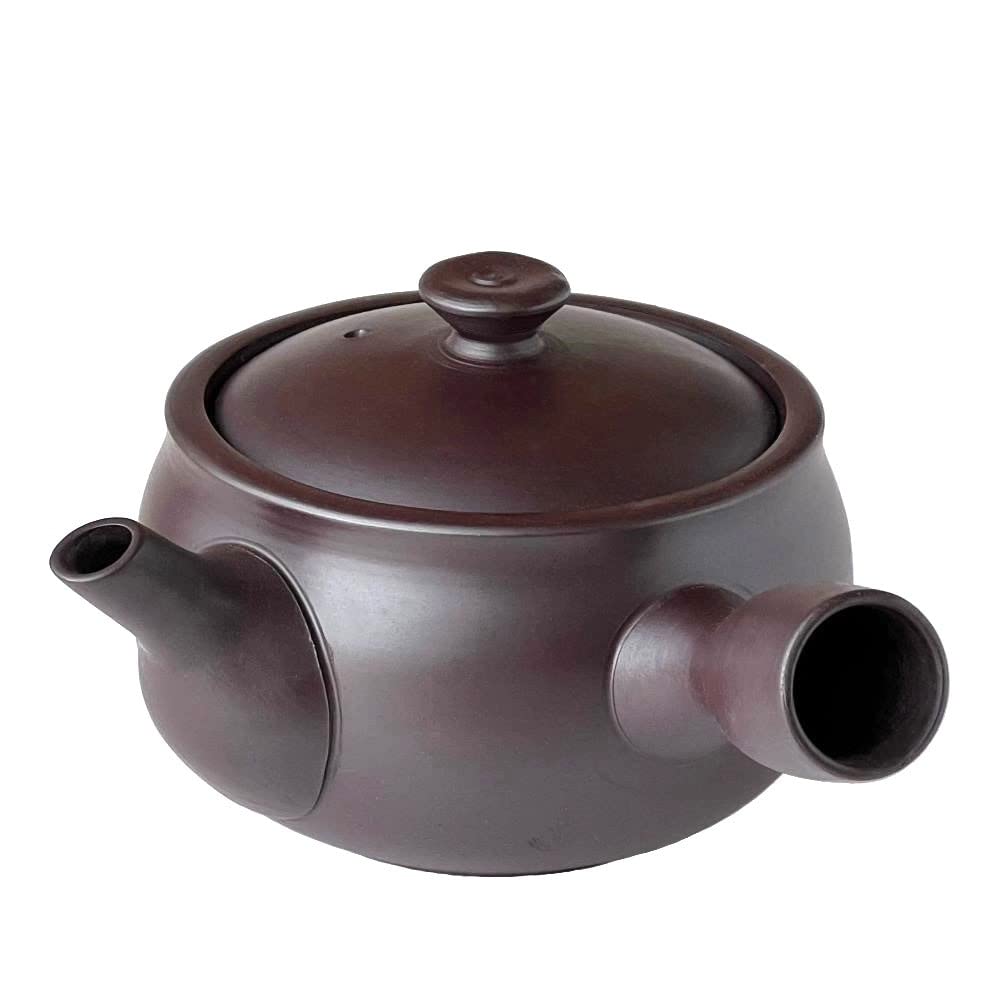
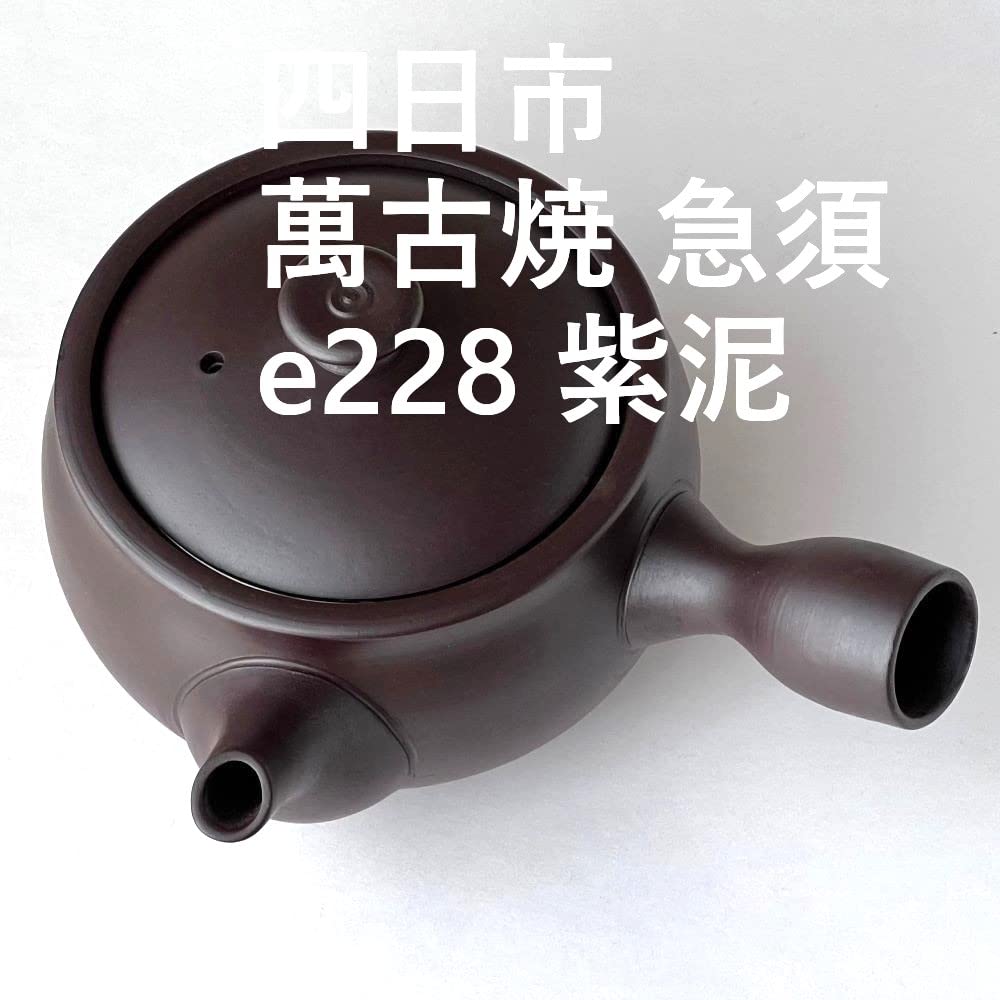
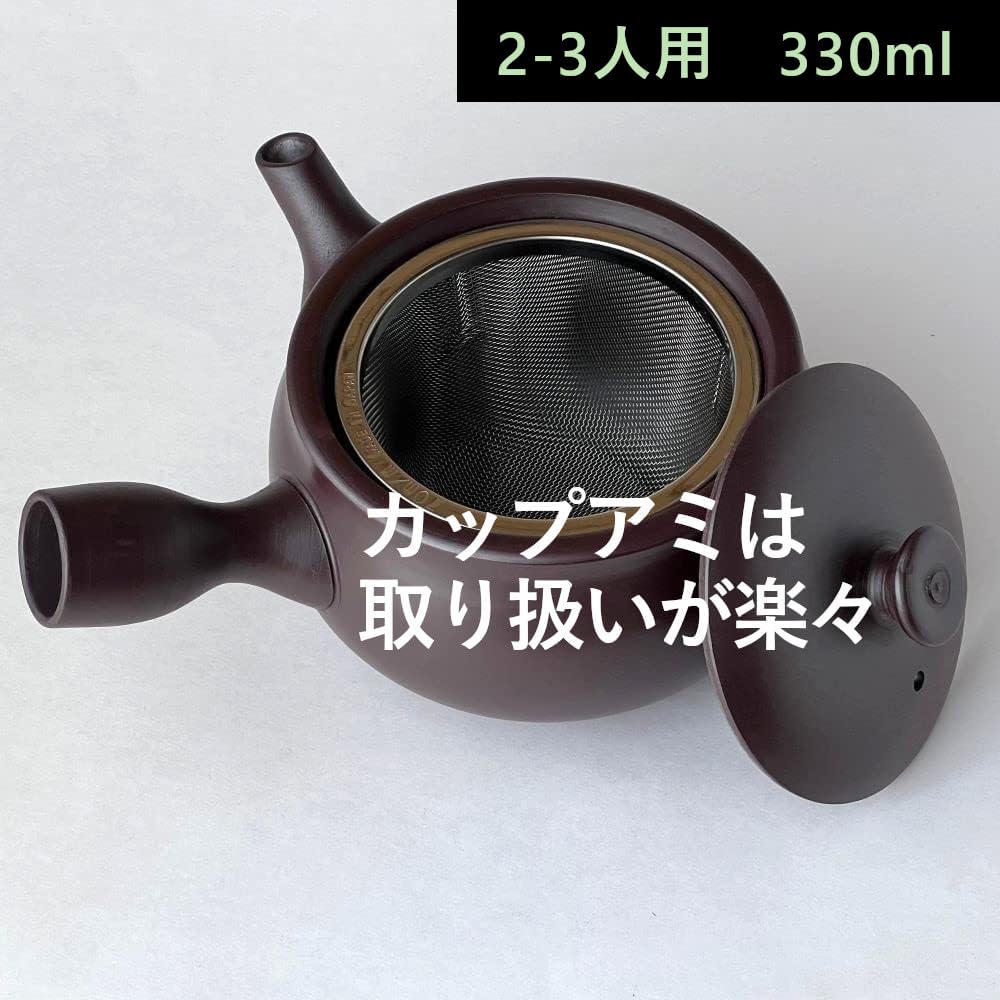
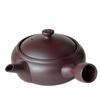
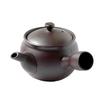
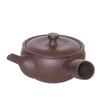
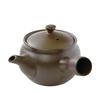
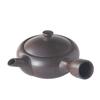
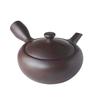
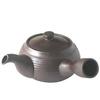
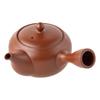
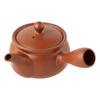
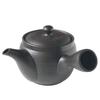
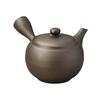
Capacity: 330ml (full) / Size: 150mm long x 130mm wide x 82mm high / Material: Ceramic, stainless steel tea strainer (cup strainer and basket strainer) / Weight: 267g / Banko ware (Yokkaichi, Mie Prefecture)
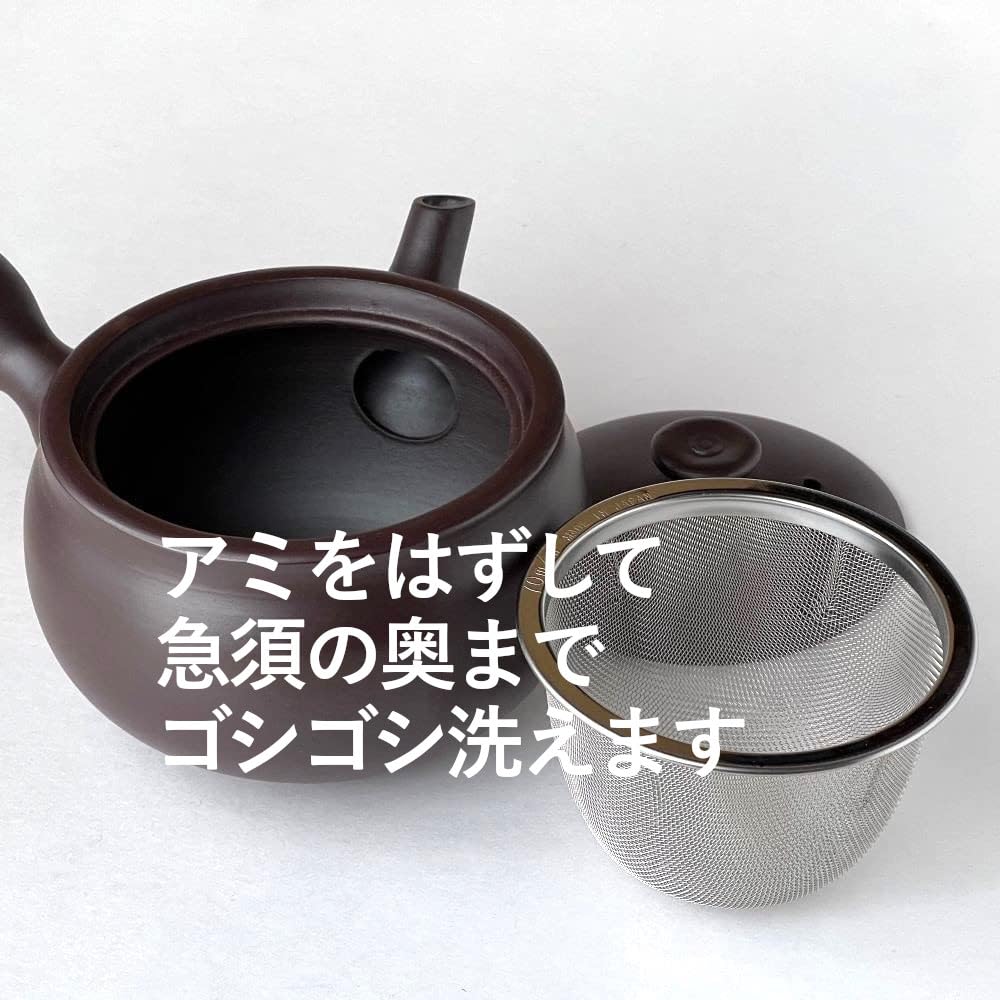
[Cup-shaped tea strainer with strainer] The cup-shaped tea strainer makes it easy to remove tea leaves, and you can remove the tea strainer to scrub the inside of the teapot.
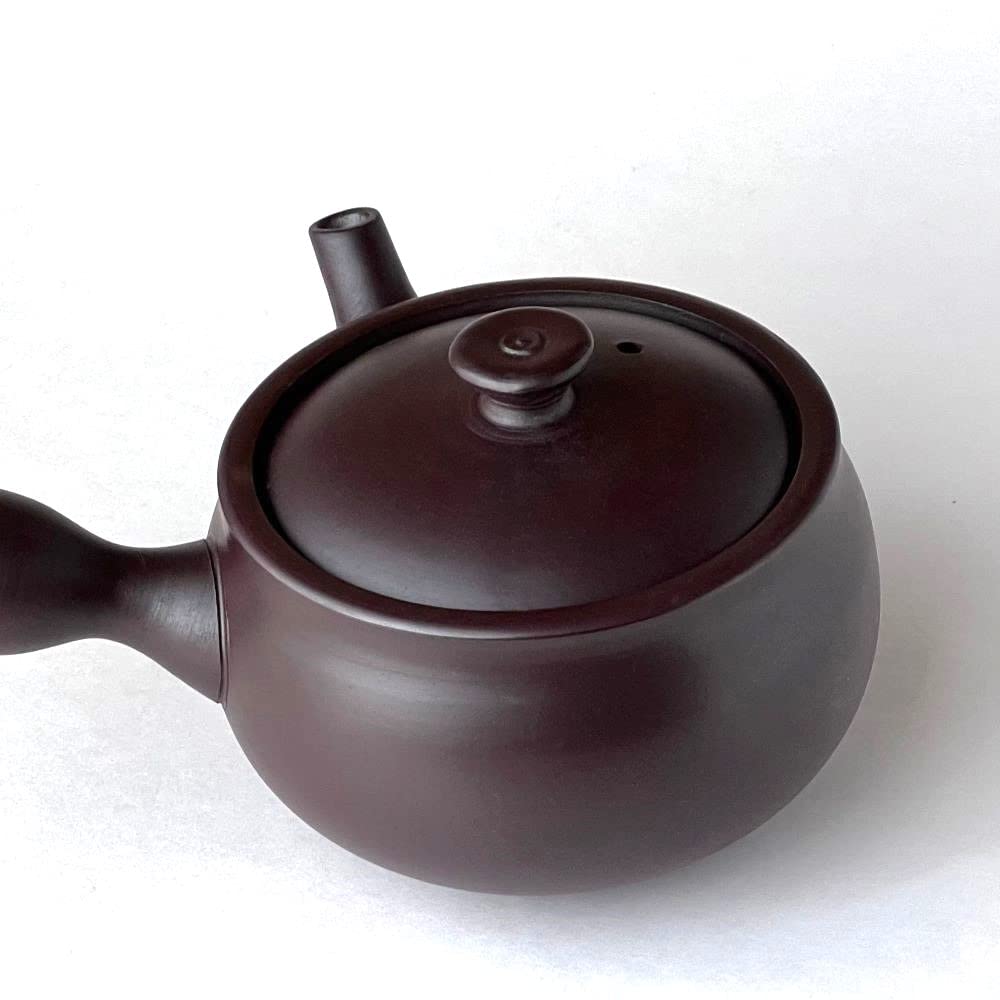
[Shidei Teapot] Made from local red clay. Red clay is rich in iron, which absorbs the bitterness of green tea and brings out its umami flavor.
[Lightweight and compact] Banko ware purple clay teapots are lightweight, simple, and compact. Their unique style has made them popular with many enthusiasts.
Banko ware originated in the 1700s near Yokkaichi, Mie Prefecture.
Teapot production became popular in the 1800s, and Yokkaichi Banko ware was designated a traditional Japanese craft in 1979.
・When it comes to Banko ware teapots, the most famous is the "Shidei" teapot. The local red clay is rich in iron, which absorbs the bitterness of green tea and brings out its umami.
Banko ware "purple clay" teapots are made using the unglazed, reduction firing method, so the more you use them, the more lustrous they become and the deeper their flavor becomes.
・Banko ware teapots are one of the two major brands of Japanese teapots, along with Tokoname ware (Aichi Prefecture) teapots.
・Banko ware teapots are popular with many enthusiasts for their unique style: lightweight, simple, and compact. How to wash a Banko ware cup strainer teapot
After using the teapot, rinse it with water or hot water.
You can remove the tea strainer and scrub every corner of the teapot.
We do not recommend using detergents or bleach as they leave an odor.
Use a soft brush to clean the details of the teapot and tea strainer.
Soaking tea in water or hot water is effective for removing tea stains. We also recommend periodically sterilizing tea strainers by boiling them.