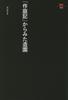
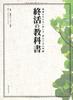
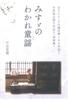
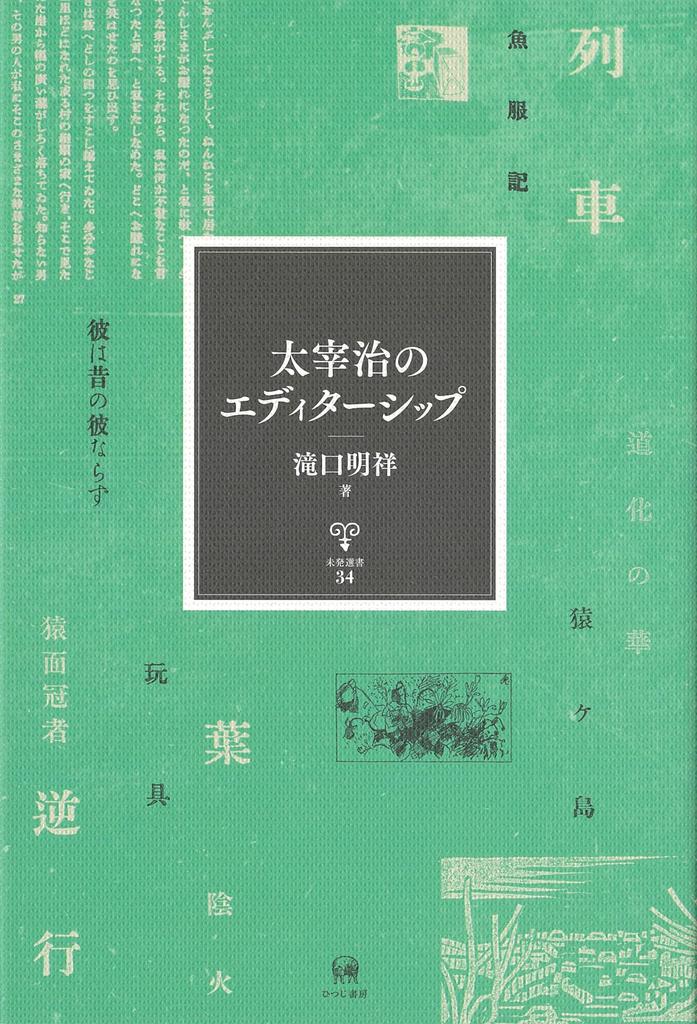
[List Price: ¥3,600 + Tax] The works of Osamu Dazai are constructed through a montage of various quotations. And by reading multiple works by Dazai, the reader's desire becomes directed towards Dazai himself as a writer. In a sense, all of Dazai's works constitute a montage that forms "Osamu Dazai." This book will explore how this mechanism was formed and reveal the multifaceted nature of Dazai's works.
[Table of Contents] Introduction: Dazai Osamu's Editorship
I. Quotations/Fragments
Chapter 1: Rise to Power and "Massage"—"Memories"
1. Reading "Memories" Historically
2. Changing "Hometown" and Family
3. Sexuality and Subjectivity
4. Various Signs of Deviation and the Search for "Truth"
5. A Retrospective to "Mother"
Chapter 2: Fragments and Montage, or Modernity as Allegorized—"One Hundred Views of Mount Fuji"
1. The Act of Seeing
2. The Pursuit of a New "Realism"
3. Mount Fuji as Allegory
4. Film as a "Mobility Space"
5. Fragments Floating To do
Chapter Three: From a Girl's "Soliloquy" to Printed Words
—"Ariake Shuku's Diary" and "The Schoolgirl"
1. The Diary that Formed the Basis of "The Schoolgirl"
2. Toyoda Masako's "Composition Class" and "Women's Review"
3. "Female Students" and "Female Factory Workers"
4. The Discourse of "Delinquent Schoolgirls"
5. "Fact" and Fiction
6. "Soliloquy" in Wartime
Chapter Four: Letters from Readers / Letters from the Author—Focusing on "Narcissus"
1. Dazai Osamu and "Letters"
2. "I" as "Loyal"
3. "Truth" Delivered
4. Letters and Written Communication
5. The Painting of Narcissus
II. War
Chapter Five: The Problem of "Trust" in Wartime—Osamu Dazai and War
1. The Relationship of "Believing—Being Believed In"
2. "Trust" as Something Beyond Subjectivity—Transcendence
3. Between "Trust" and "Disbelief"
Chapter Six: Prohibition and Encouragement—"Minister of the Right Sanetomo"
1. Surface/Deep Layer
2. Prohibition/Encouragement
3. Rumors and Censorship in Wartime
4. "Intention" and "Meaning"
Chapter Seven: A Journey Around the Nation—"Tsugaru"
1. "Hometown" and the Traveler
2. Breaking Free from "Adult" = "City Dweller"
3. The Theory of Landscape
4. "A State of Calmness and Peace"
III. Man/Woman
Chapter Eight: Humor Stories of Men—"Pandora's Box"
I. The "Scene on a Stormy Night"
II. Words Addressed to "You"
III. The "New Man" and the Women
IV. "Woman" as the "Other"
Chapter Nine: Writing and "Revolution"—"The Setting Sun"
I. The Repetition of "Ah."
II. The Intersection of "Writing" and "Reading"
III. "Twilight" and "Morning"
IV. The Transformation of "I"
Chapter Ten: "Self-Portrait" and the Gaze from Others—"No Longer Human"
Introduction
I. Dazai Osamu and Oba Yozo
II. Various Aspects of "Quotation"
III. "Human" and "Woman"
IV. "No Longer Human" Continues to Be Reread
List of Original Publications


 Geld zurück bei Nichtlieferung